|
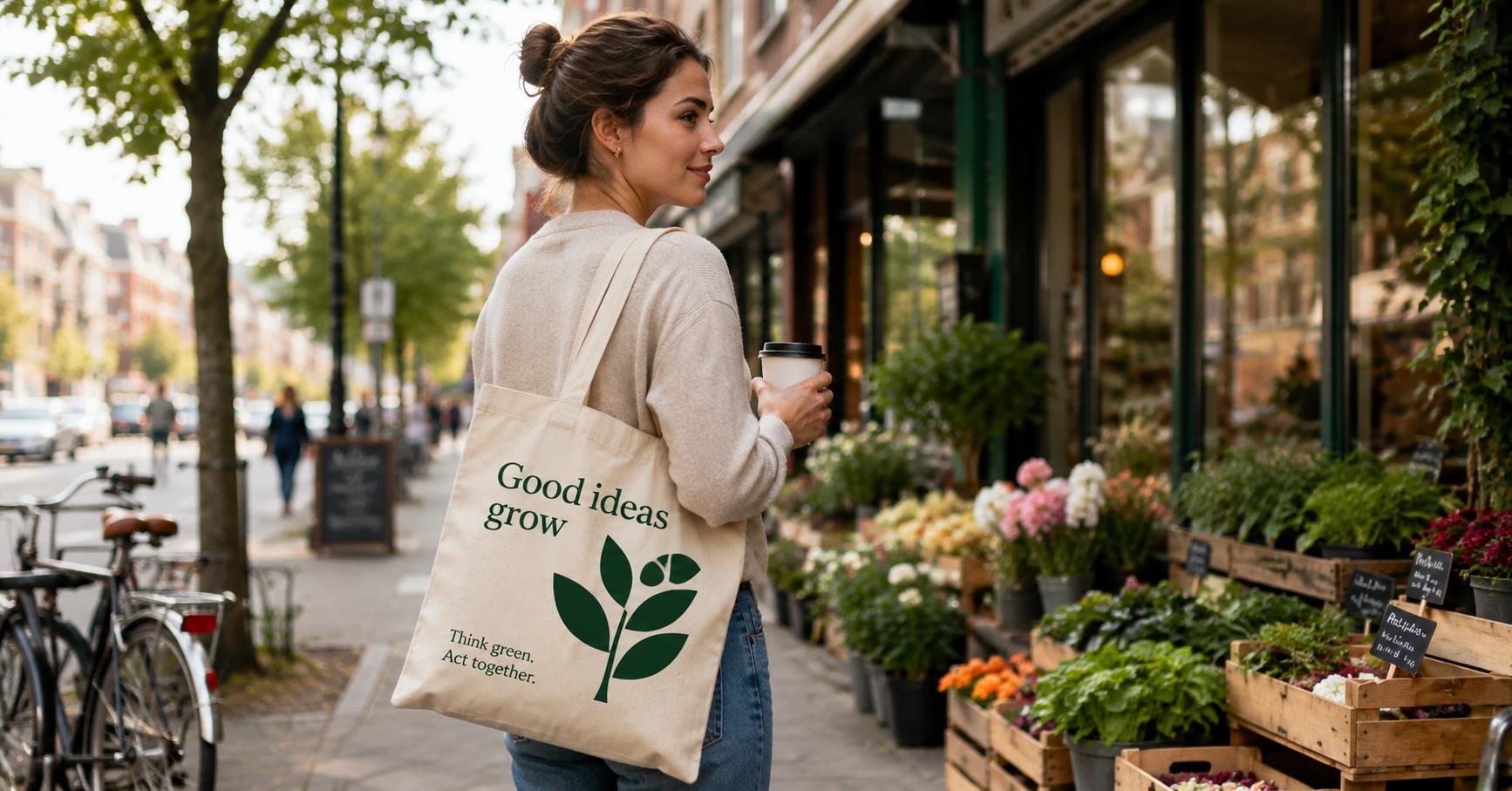
Printed tote bags are everywhere: at the office, on the train, at events and around town. That visibility is exactly what makes them such an effective promotional product. A useful bag is carried again and again, allowing your logo or message to travel with it. But not every tote bag gets used regularly. Some are too thin, too small or simply not practical enough for everyday use. So how do you choose a tote bag that people genuinely want to carry? The answer lies in finding the right balance between practical use, appearance and printing. What exactly is a tote bag?A tote bag is a spacious carry bag with two handles and usually an open top. Its simple design makes it suitable for a wide range of uses, from carrying documents and everyday essentials to shopping or visiting an event. The name comes from the English verb to tote, meaning to carry or take something with you. That is exactly what the bag is designed for. A tote bag describes the shape and style of the bag rather than the material. Models can be made from canvas, recycled polyester, jute and other materials. A tote bag is therefore not automatically the same as a cotton bag. Why do tote bags work so well as promotional products?The biggest advantage of a tote bag is its practical value. A flyer is often read once and discarded. A useful bag can remain in circulation for months or even years. Every time the bag is carried, your brand is seen again. This makes printed tote bags particularly suitable for organisations looking for visibility without giving away a product that feels overly promotional. Tote bags also offer a relatively large printing area. This gives you room for a logo, slogan, illustration or complete design. The bag can therefore become more than a carrier for your brand. With the right design, it can become something people choose to use. Start with how the bag will be usedThe best tote bag is not automatically the cheapest, strongest or largest model. The right choice depends on the situation. Before selecting a bag, consider who will receive it and what they are likely to use it for. A lightweight model may be perfectly suitable for a one-day event, while a welcome pack or customer gift often calls for something more substantial. In practice, the bags that are reused most often tend to combine a simple design with enough strength for everyday use. For trade fairs and eventsAt a trade fair, the bag needs to be practical above all else. Visitors can use it immediately for brochures, samples and other materials. A lightweight model is often sufficient, especially when large quantities are required. At the same time, the bag continues to promote your organisation throughout the event. A recognisable design can create considerable visibility on a busy exhibition floor. For welcome packsA tote bag is also a practical way to bring several items together. Fill it with useful products for new employees, customers or business contacts, and the bag itself immediately becomes part of the gift. For this purpose, a sturdier model often works better. A higher-quality bag is more likely to be used again after the contents have been removed. For campaigns and organisationsA tote bag offers more space than a small promotional item. This makes it useful for campaigns, charities and organisations that want to communicate a message as well as a logo. A strong illustration, short statement or campaign design can sometimes attract more attention than a large company logo. Choose a bag that works without the printA simple rule helps when choosing a tote bag: would the recipient still use it if there were no logo on it? If the answer is yes, you are already starting with a strong promotional product. Look at the size, handles and overall construction. Long handles make a bag easier to carry over the shoulder. A wide base gives it more capacity. Heavier materials often feel more suitable for repeated use. Colour matters too. A neutral bag can help a colourful design stand out, while a coloured bag may fit a brand identity more naturally. The print should enhance the product. How useful and attractive the bag is ultimately determines how often it will be seen. Match the printing technique to the designOnce the bag itself has been chosen, the next step is the print. The best printing technique depends on the material, quantity and design. Screen printing is often used for logos and designs with a limited number of colours. It is particularly suitable for larger quantities. Transfer printing works well for detailed designs and can be used on various types of materials. Full-colour printing offers more creative freedom. It is suitable for photographs, colour gradients and designs containing many different colours. Some tote bags can be printed on both the front and back. Others offer additional printing positions. The best option depends on how visible you want the design to be. Large logo or a more subtle design?A large printing area does not mean you need to use all of it. A large logo works well when maximum brand recognition is the goal. For a more premium appearance, a smaller and more subtle print can be more effective. It is worth thinking about what people will actually want to carry. A creative illustration, a short message or a carefully positioned logo can make the bag feel more like a useful product and less like an advertisement. The strongest promotional tote bags usually do both: they make the organisation visible while still being attractive enough to use in everyday life. Think beyond the giveaway itselfA printed tote bag does not have to be a standalone promotional item. It can also be used as packaging for other gifts, as part of an event concept or as a recognisable element within a wider campaign. This gives the bag a double role. It brings products together and creates additional visibility at the same time. The most effective tote bag is therefore not necessarily the one with the biggest logo or the lowest price. It is the bag that matches the recipient, the occasion and the intended use. Choose a bag people genuinely want to carry, and the promotional value follows naturally. |